Hybrid Plant
Botanical Hybrids / Morphological Study
Visual Studies
This visual study explores the transformation of natural forms through digital modeling, using plants as a starting point for morphological experimentation. By extracting fundamental elements such as stems, leaves, and growth patterns, the project reinterprets botanical structures as a set of manipulable components
Through ZBrush, these elements are hybridized with abstract and symbolic objects—ranging from skeletal fragments to fluid geometries—producing a series of speculative forms that oscillate between the organic and the artificial. Rather than aiming for realism, the project focuses on formal mutation and compositional logic, testing how recognizable natural systems can be distorted, recombined, and reimagined
The result is a collection of synthetic organisms that blur the boundary between biological growth and constructed form, serving as a foundation for future spatial and architectural explorations
Plant Reference
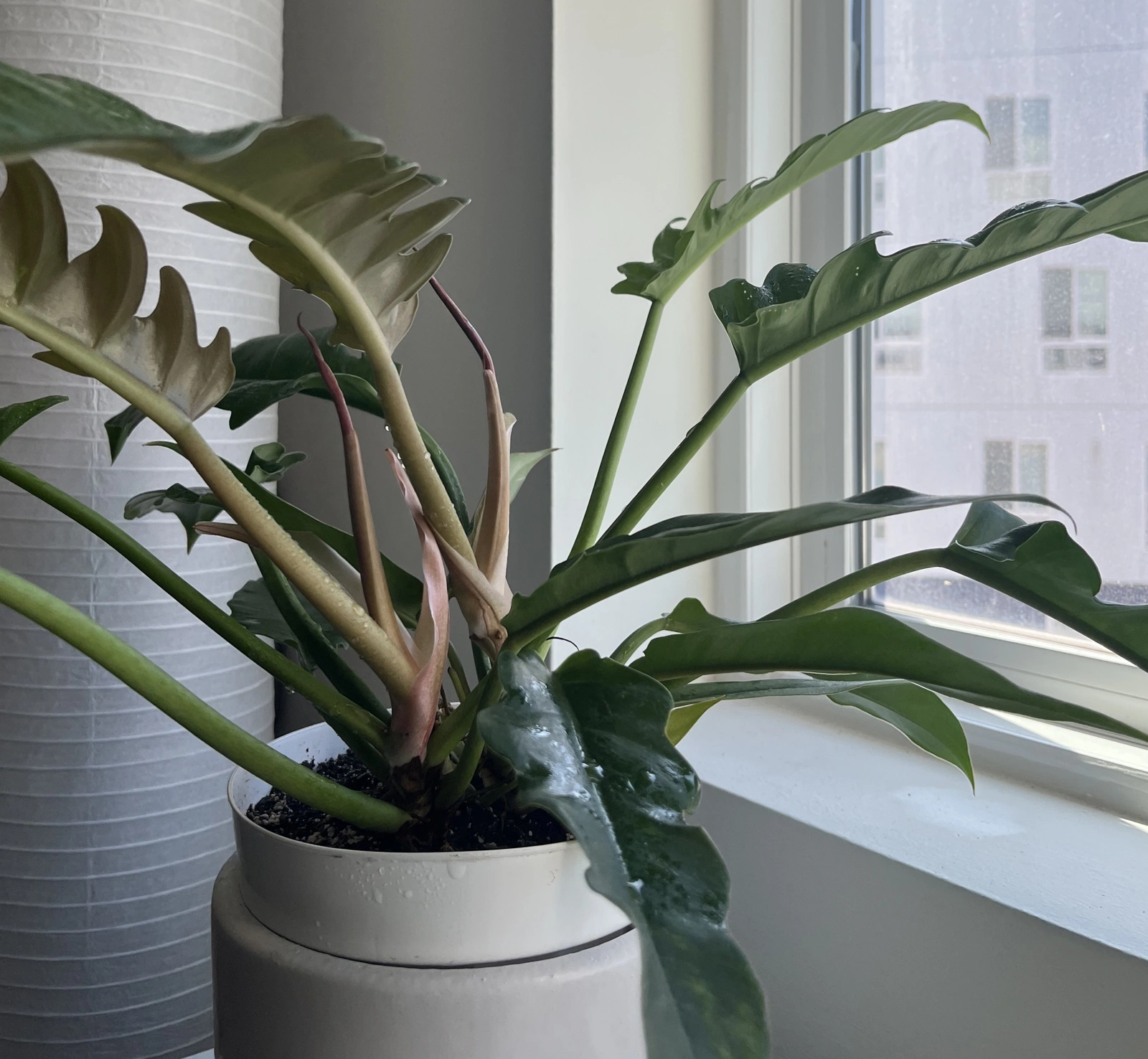
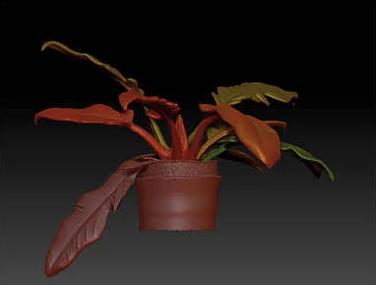
The project begins with the observation of a real plant as a source of form structure and material reference. Natural geometries including leaves stems and growth patterns are documented and translated into a base condition for further transformation
Rather than serving as a fixed model the plant operates as an open system providing a foundation for abstraction and reinterpretation
Morphological Study
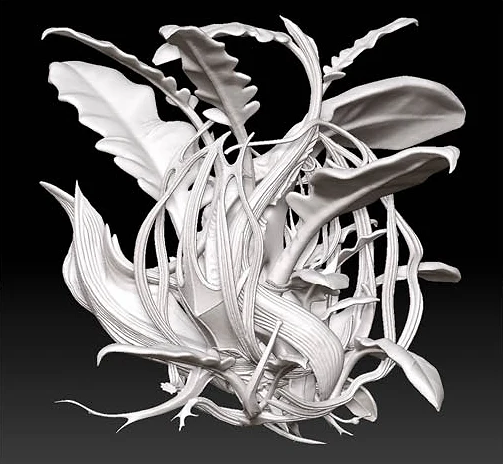
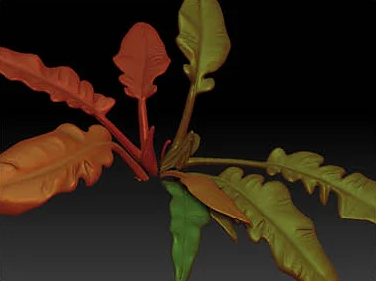
This study develops a method of transforming natural plants into hybrid digital forms through sculpting and recomposition in ZBrush. Original botanical structures are deconstructed and reassembled into composite objects that shift from representation toward abstraction allowing form to operate as a generative medium rather than a direct copy of reality
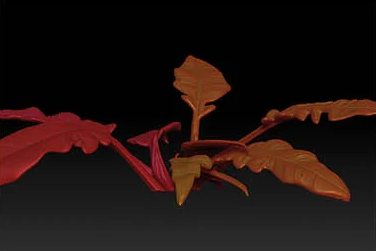
At the same time plant geometries are extracted from photographic data and reconstructed into 3D models forming a base for further manipulation. Individual leaf components are isolated refined and recombined enabling precise control over geometry texture and variation while establishing a workflow that translates real-world reference into iterative design processes
Digital Studies
Material Translation
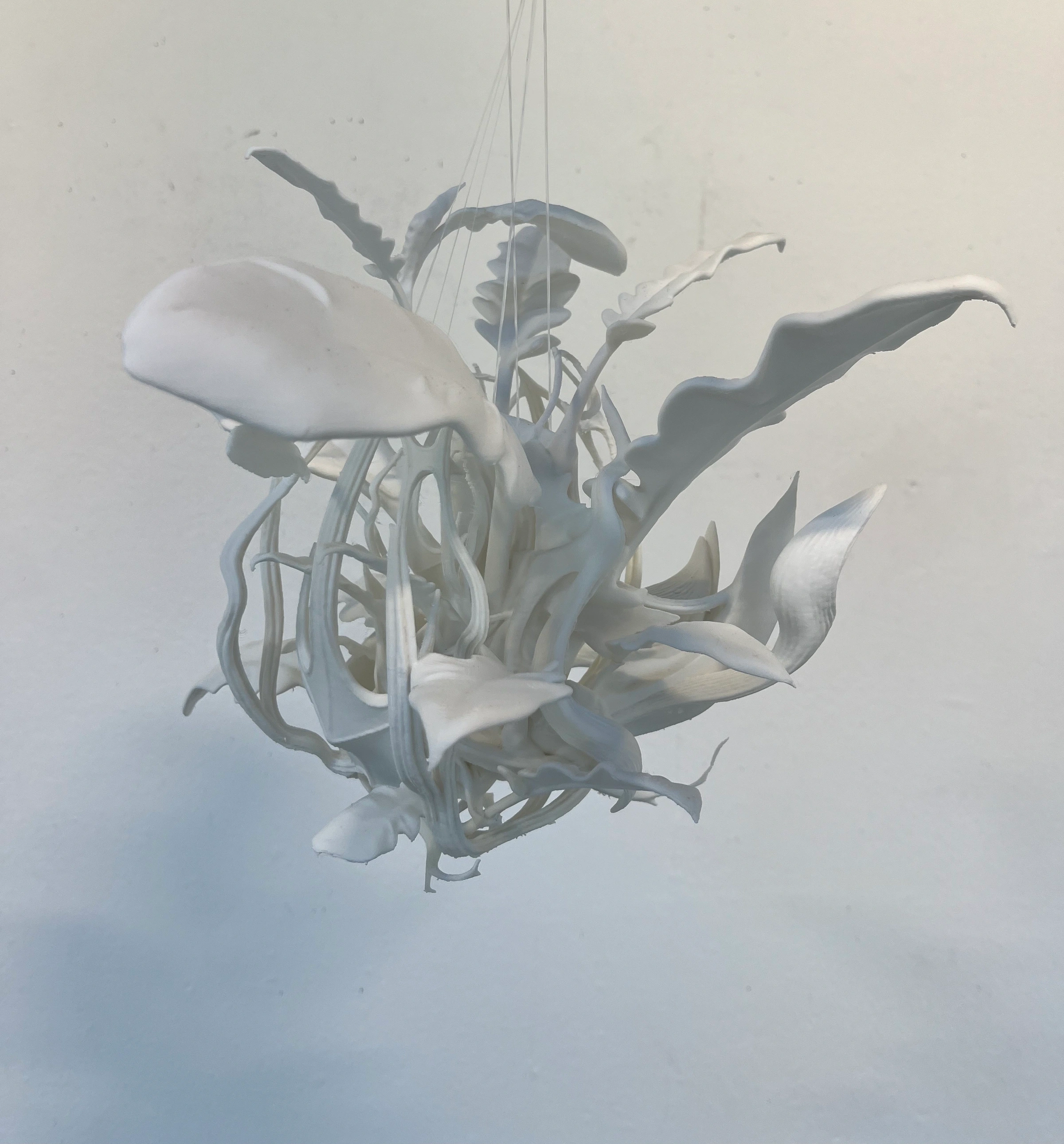
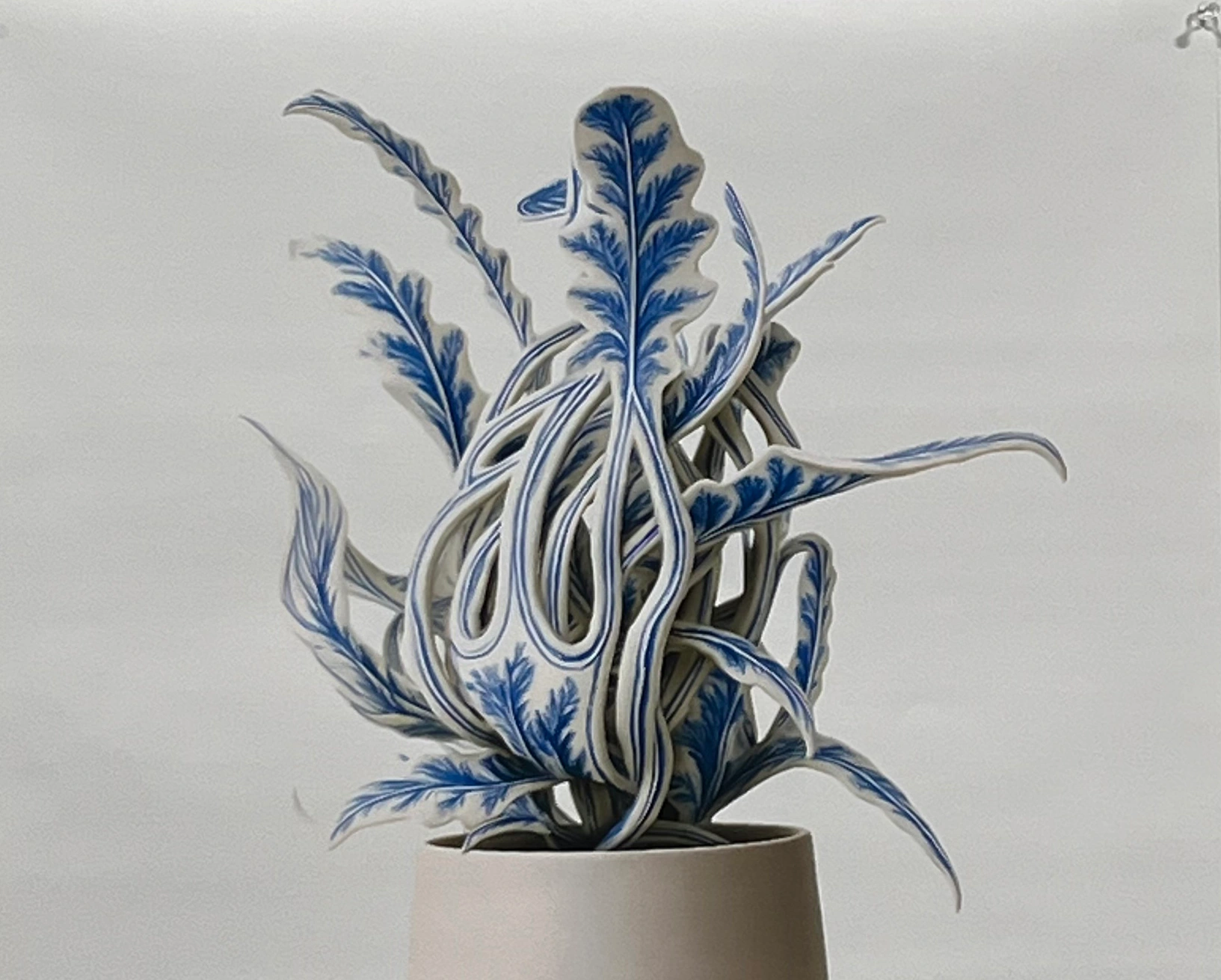
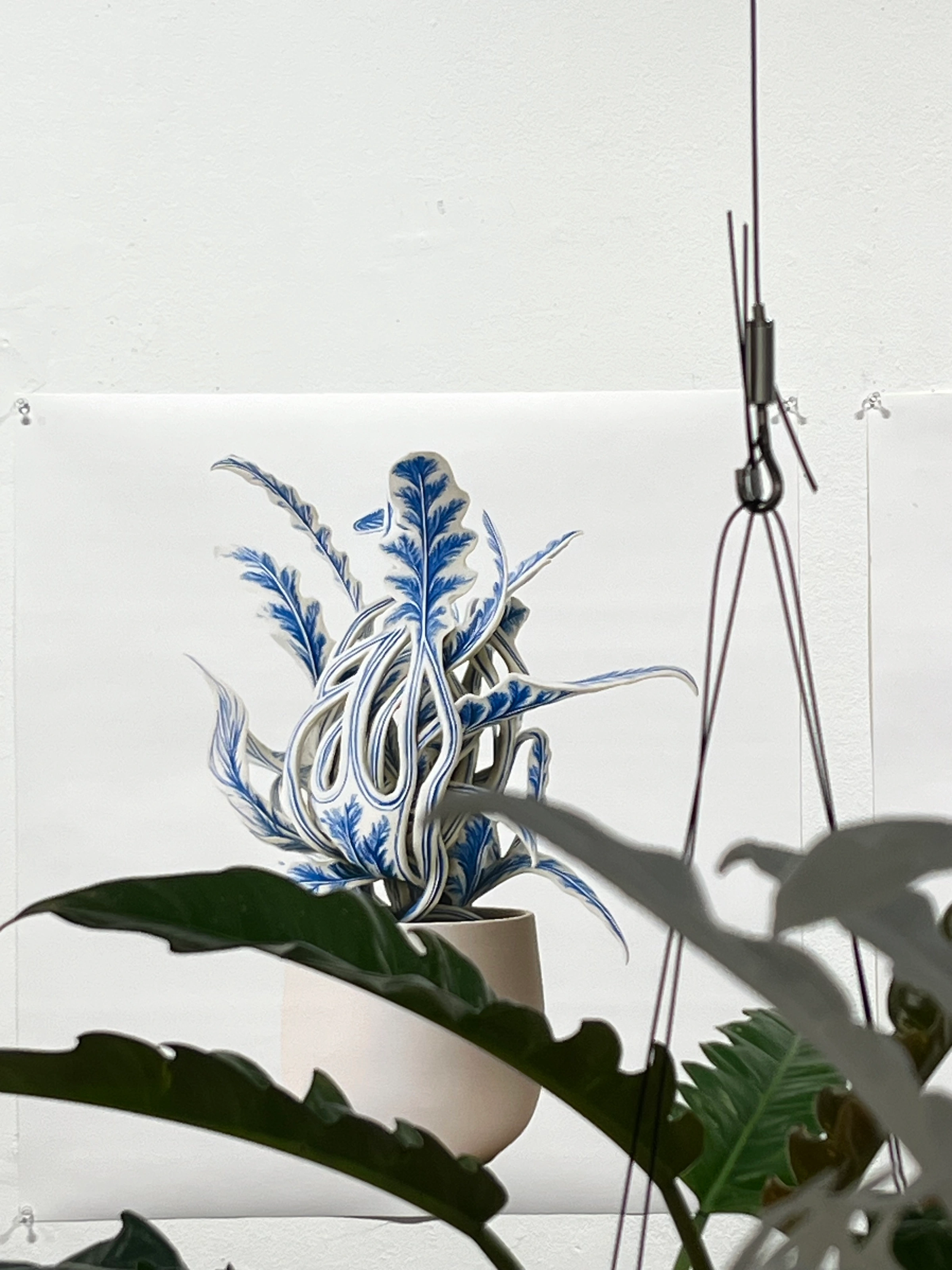
The transformed plant is reinterpreted through digital modeling 3D printing and AI-based image processing generating multiple modes of representation. Physical prints capture spatial complexity while rendered images extend the object into new visual and cultural contexts
Through material translation and stylistic transformation the project shifts from natural reference to hybrid artifact allowing the work to exist between object image and exhibition