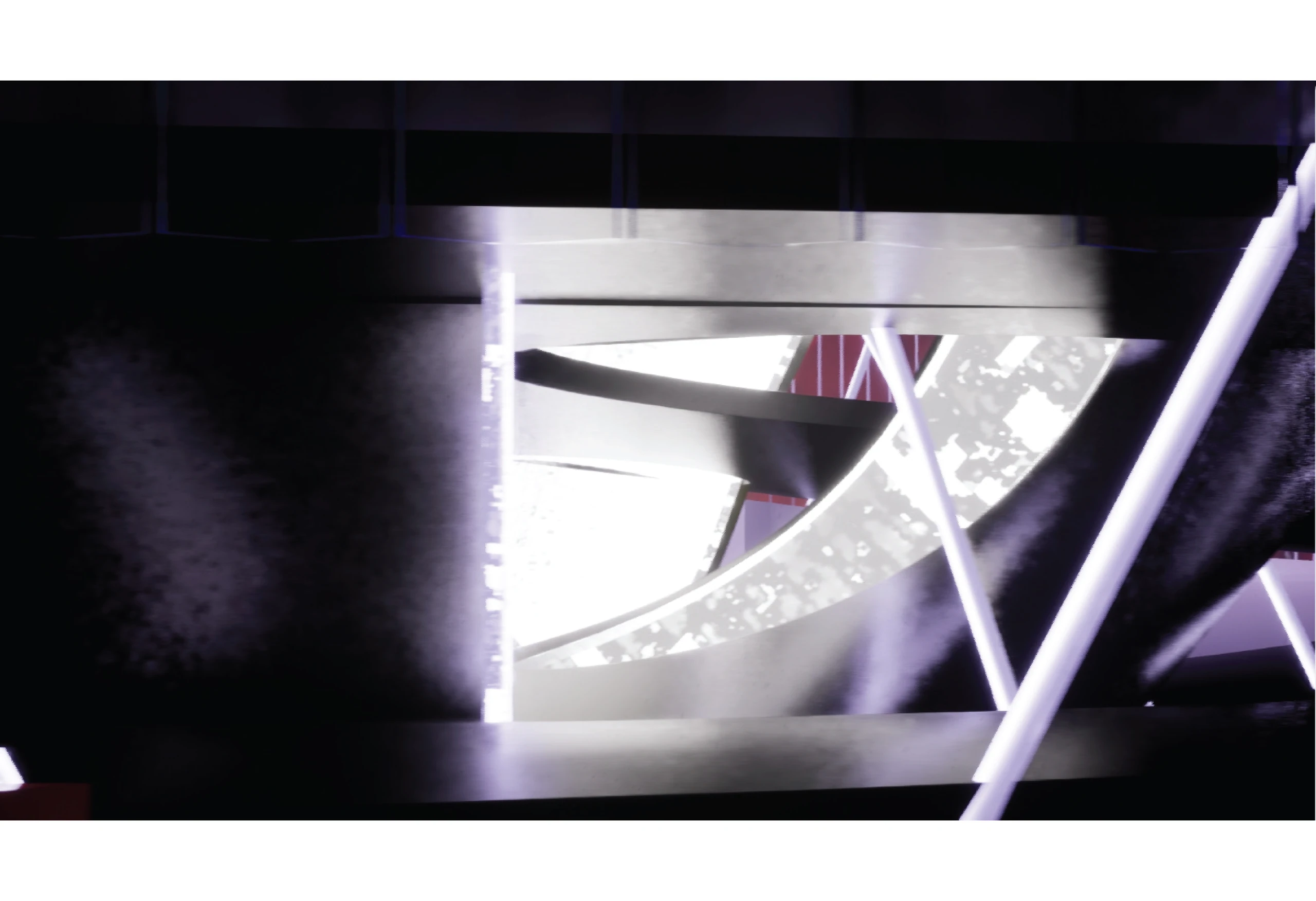
MEDIA MUSEUM
Architecture / Media
What actually counts as media?
Media is usually understood as something we watch — an image, a screen, a piece of information. But it can also emerge through participation: when people act within a space, when someone watches another person participate, or when sound, image, movement, and people begin affecting one another.
That idea became the starting point for Media Museum.
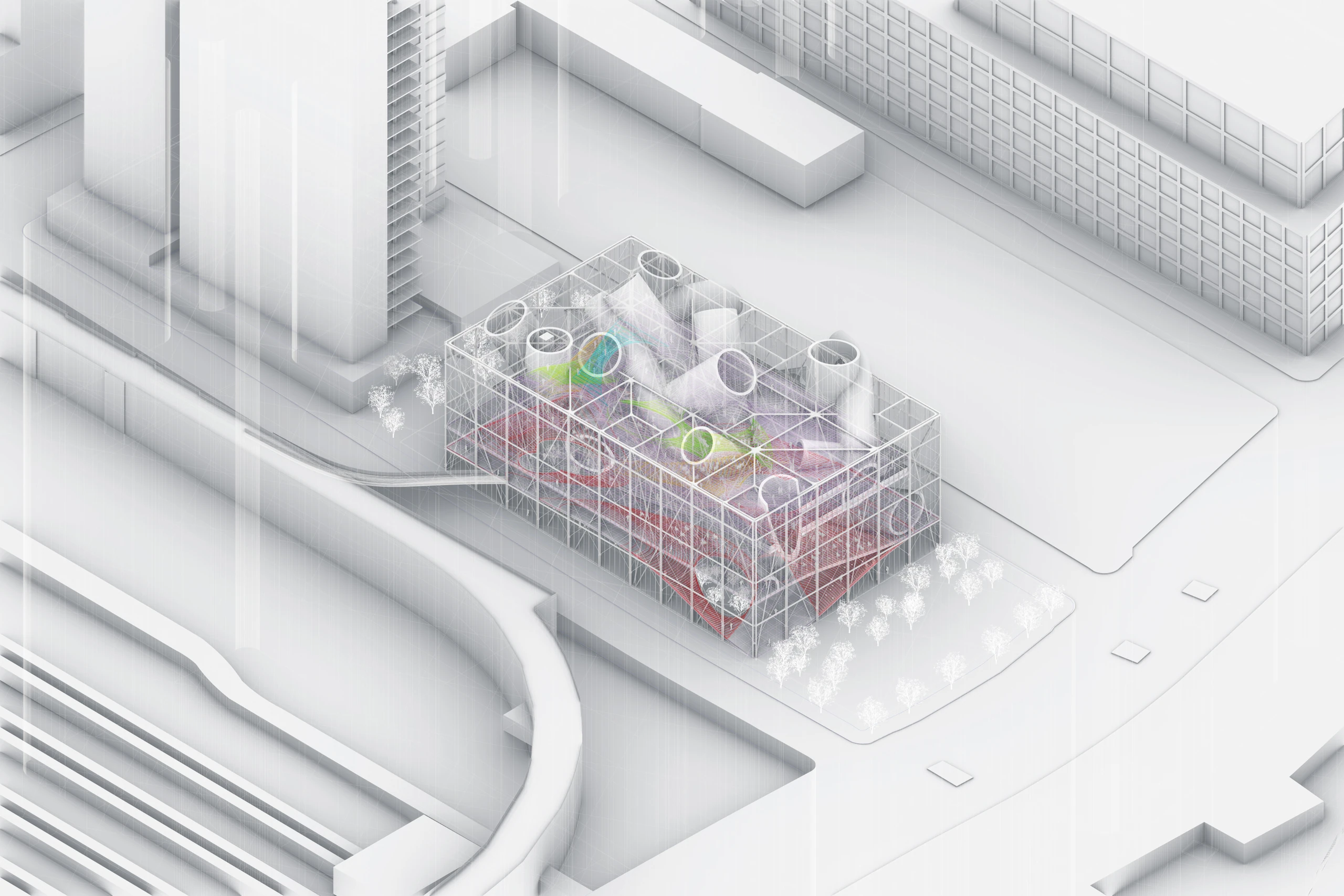
Located near the High Line on Manhattan’s riverfront, the building uses openings, layered facades, sound, circulation, and changing views to shift the relationship between seeing and being seen.
Visitors are not only looking at media. Their movement and presence can also become part of what someone else experiences.
The architecture therefore does more than contain media. At certain moments, it becomes media itself.
SPATIAL MONTAGE
A moving sequence through the museum, where image, sound, structure, and circulation overlap.
CONCEPTUAL FRAMING
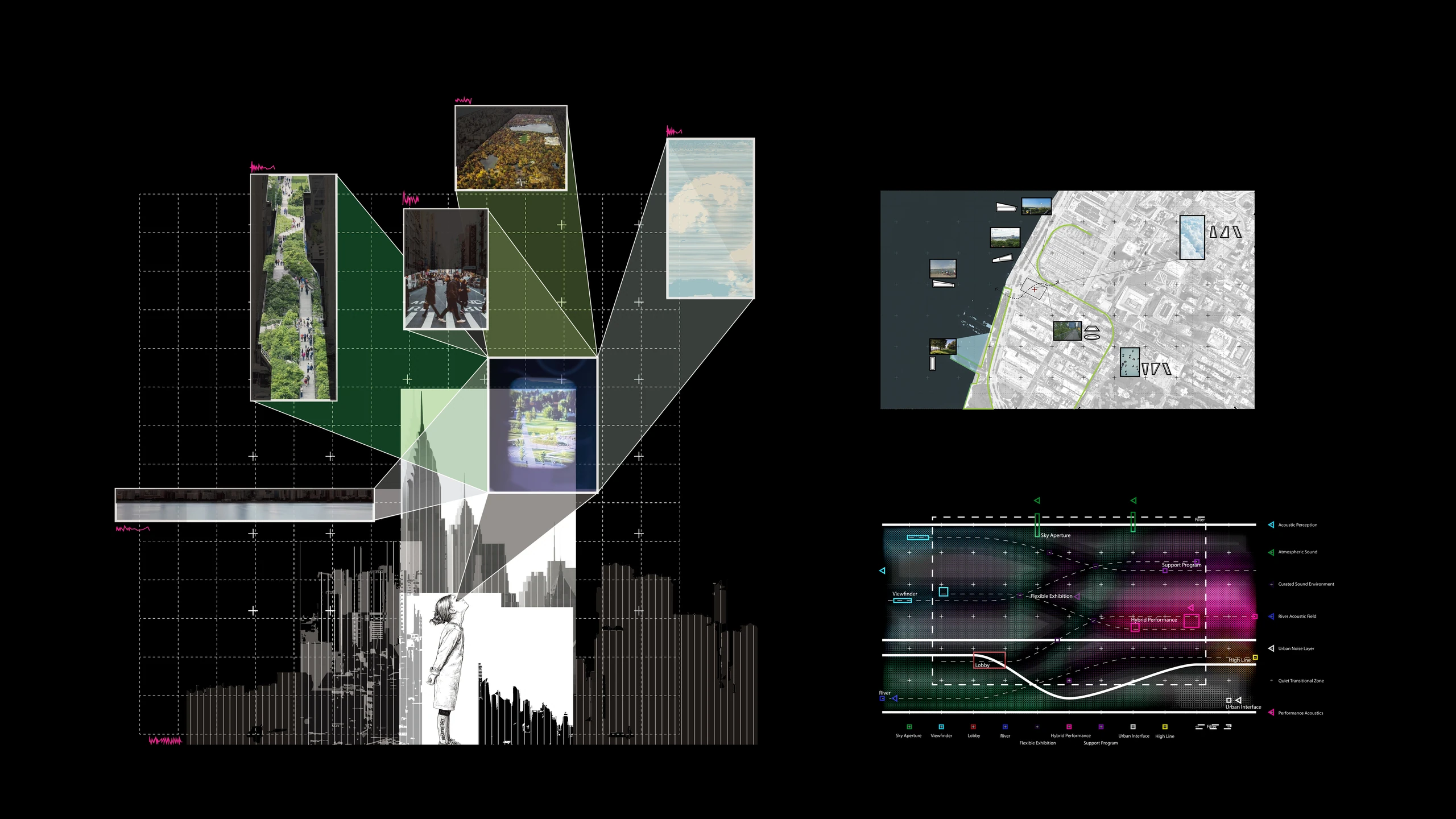
The project began by treating media as something spatial rather than something confined to a screen.
Views, sound, movement, and fragments of the city become material that can be selected, framed, and rearranged through architecture.
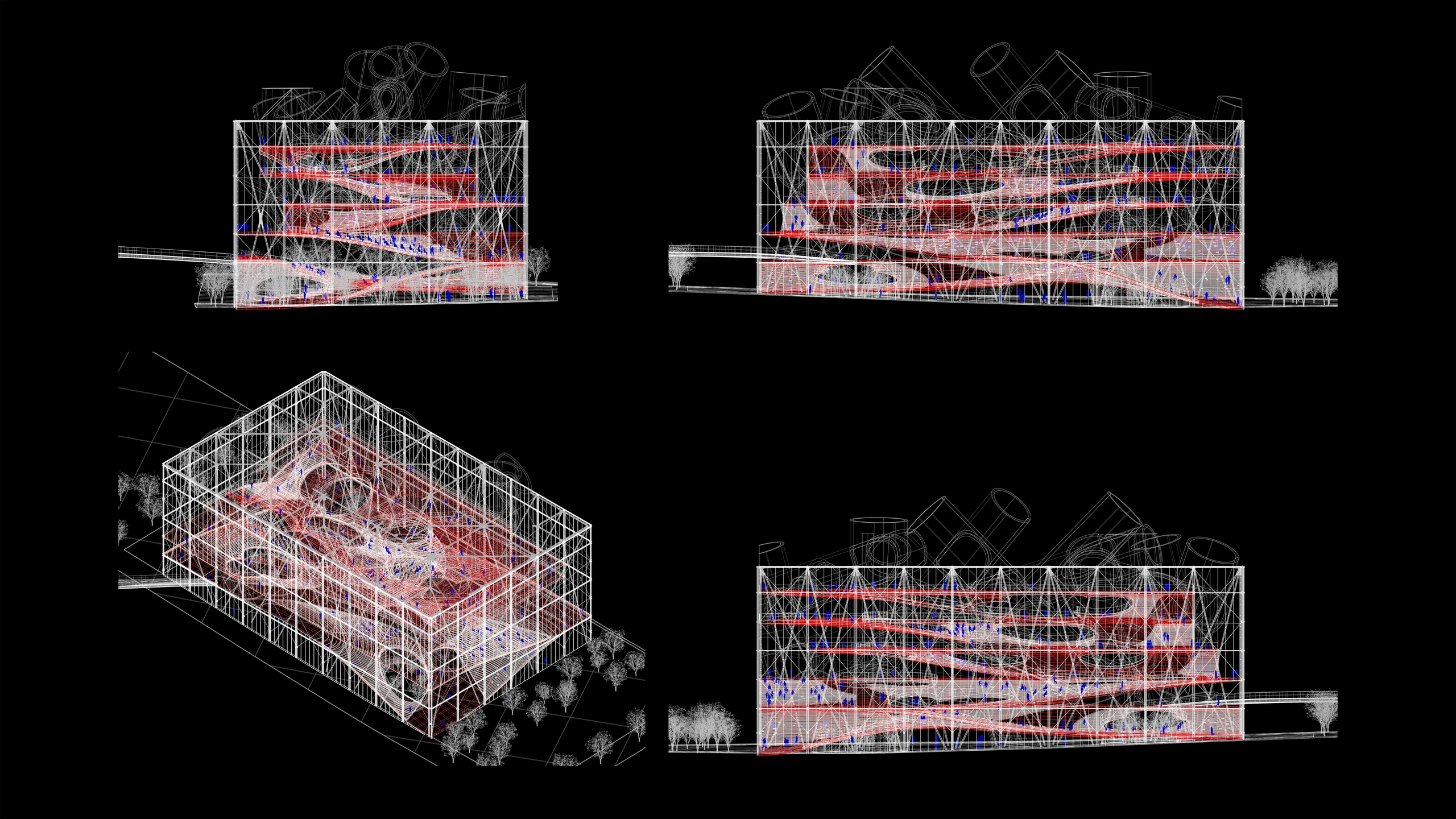
SPATIAL STUDIES
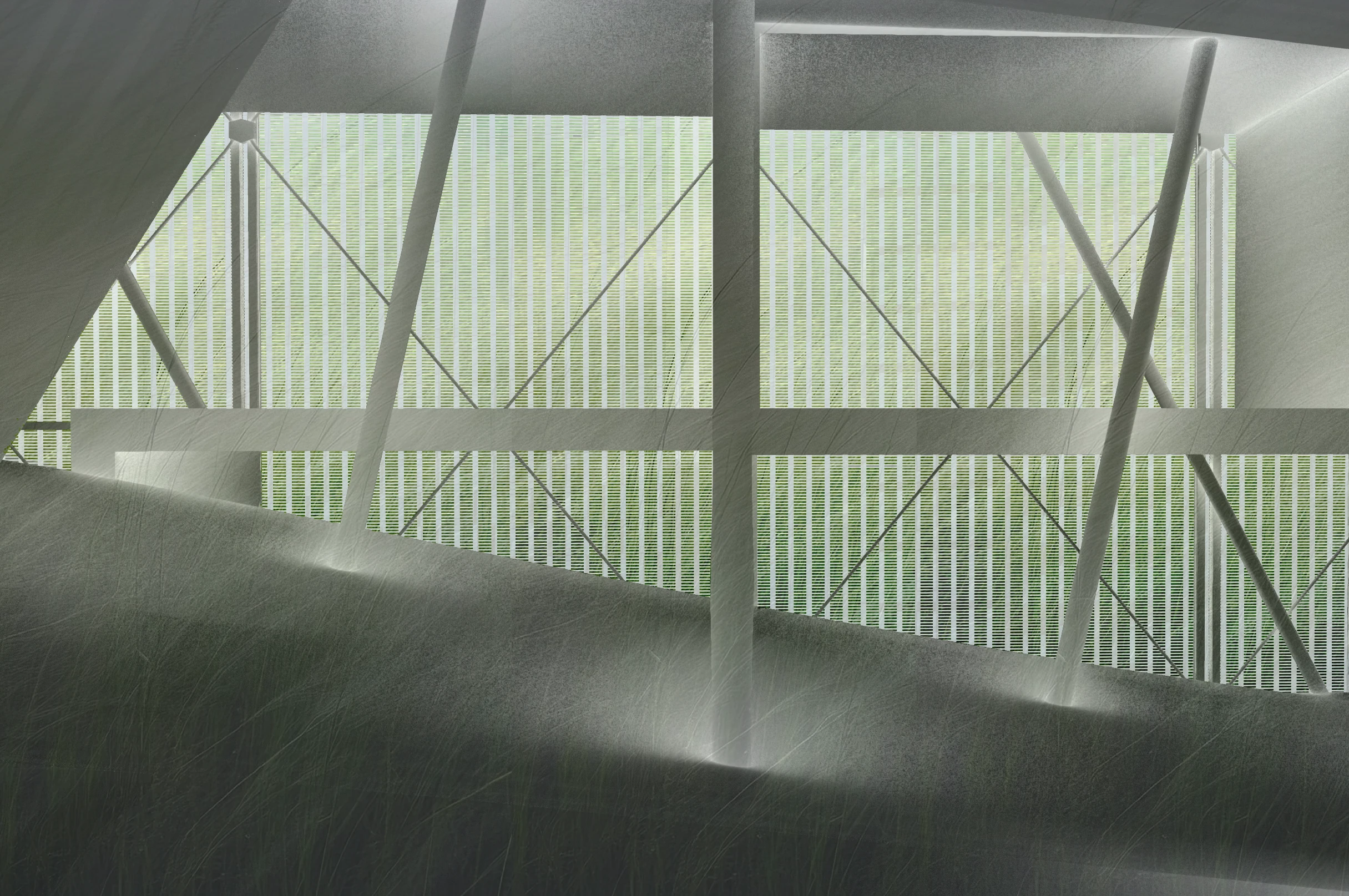
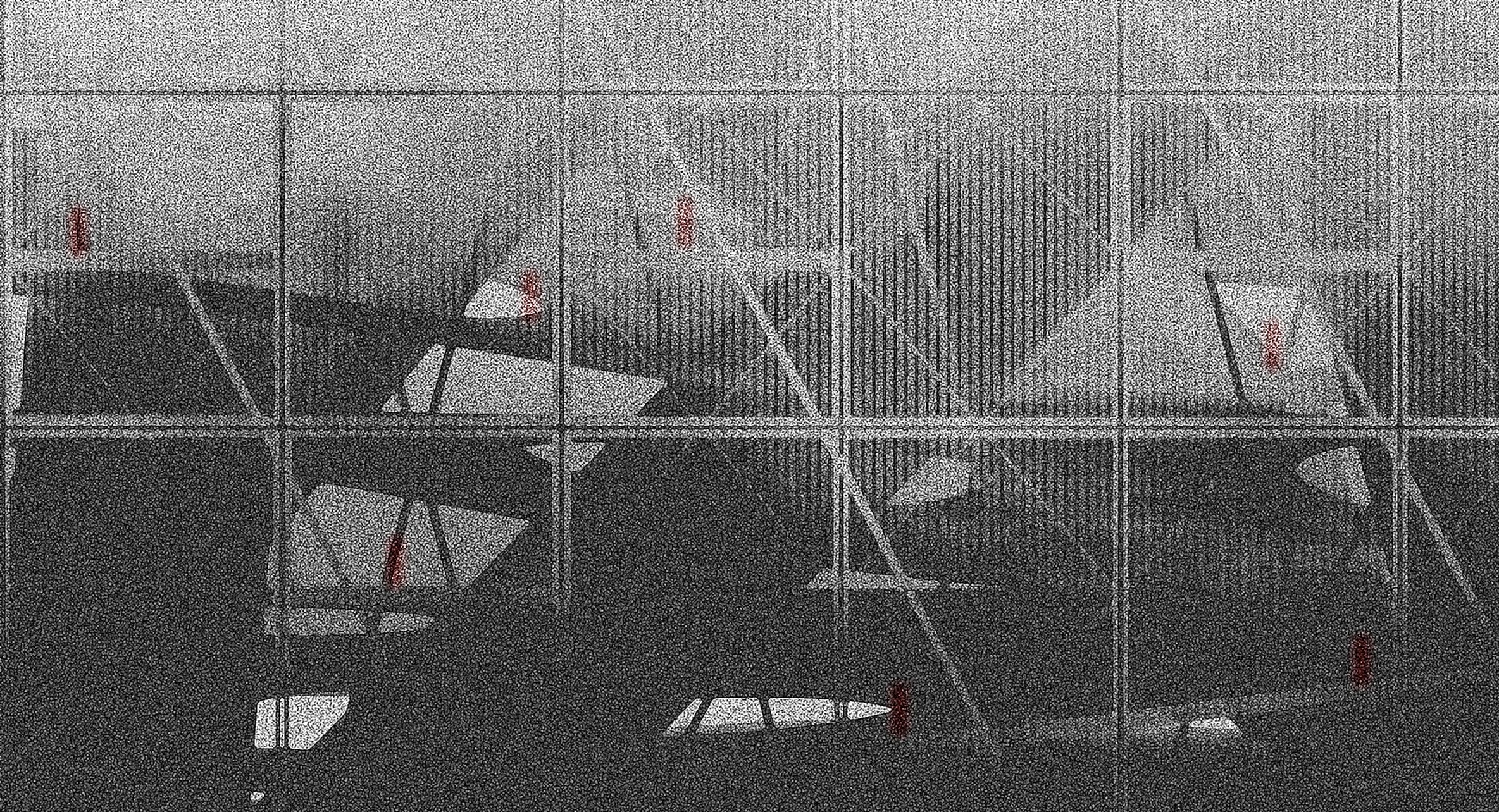
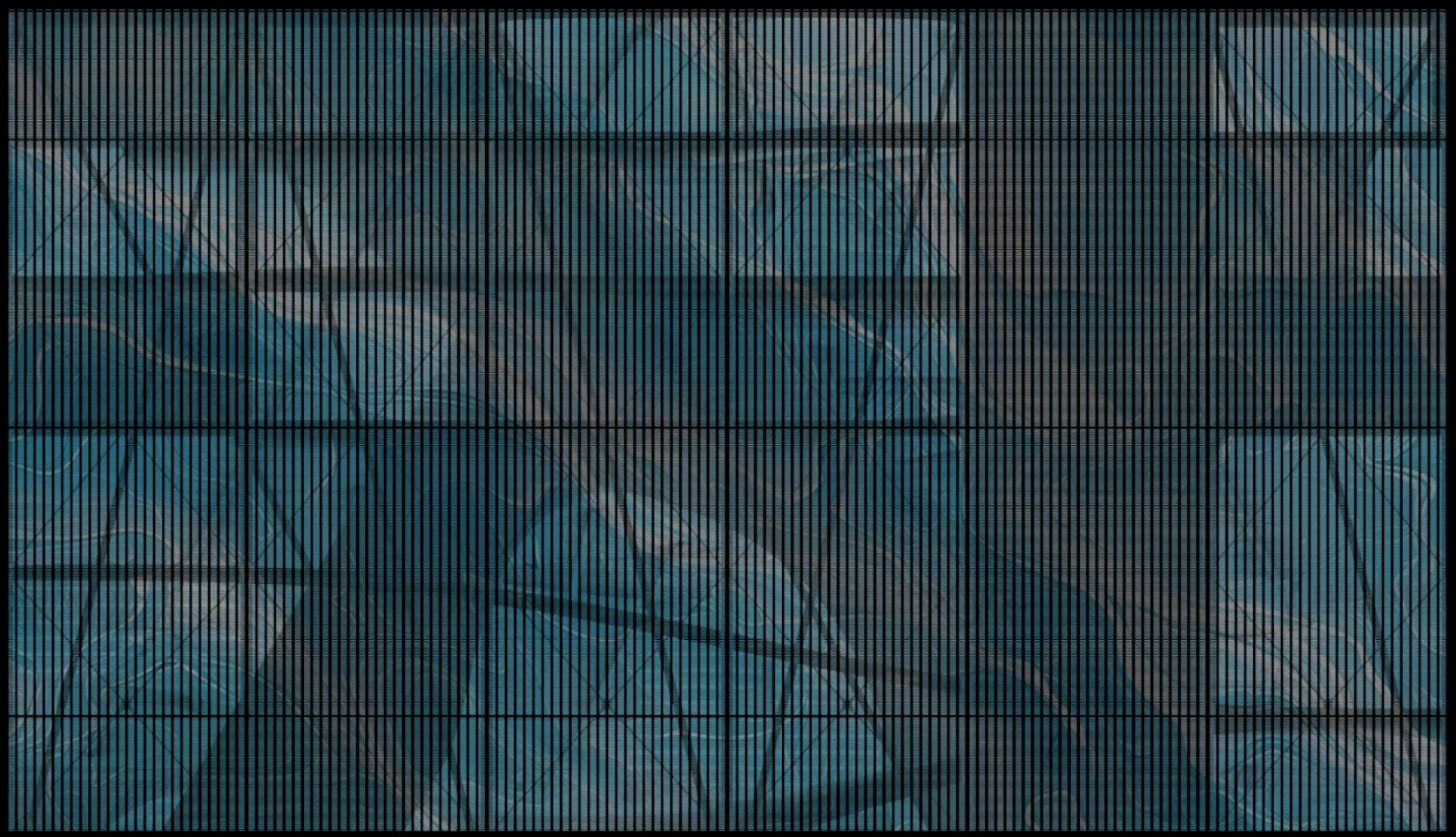
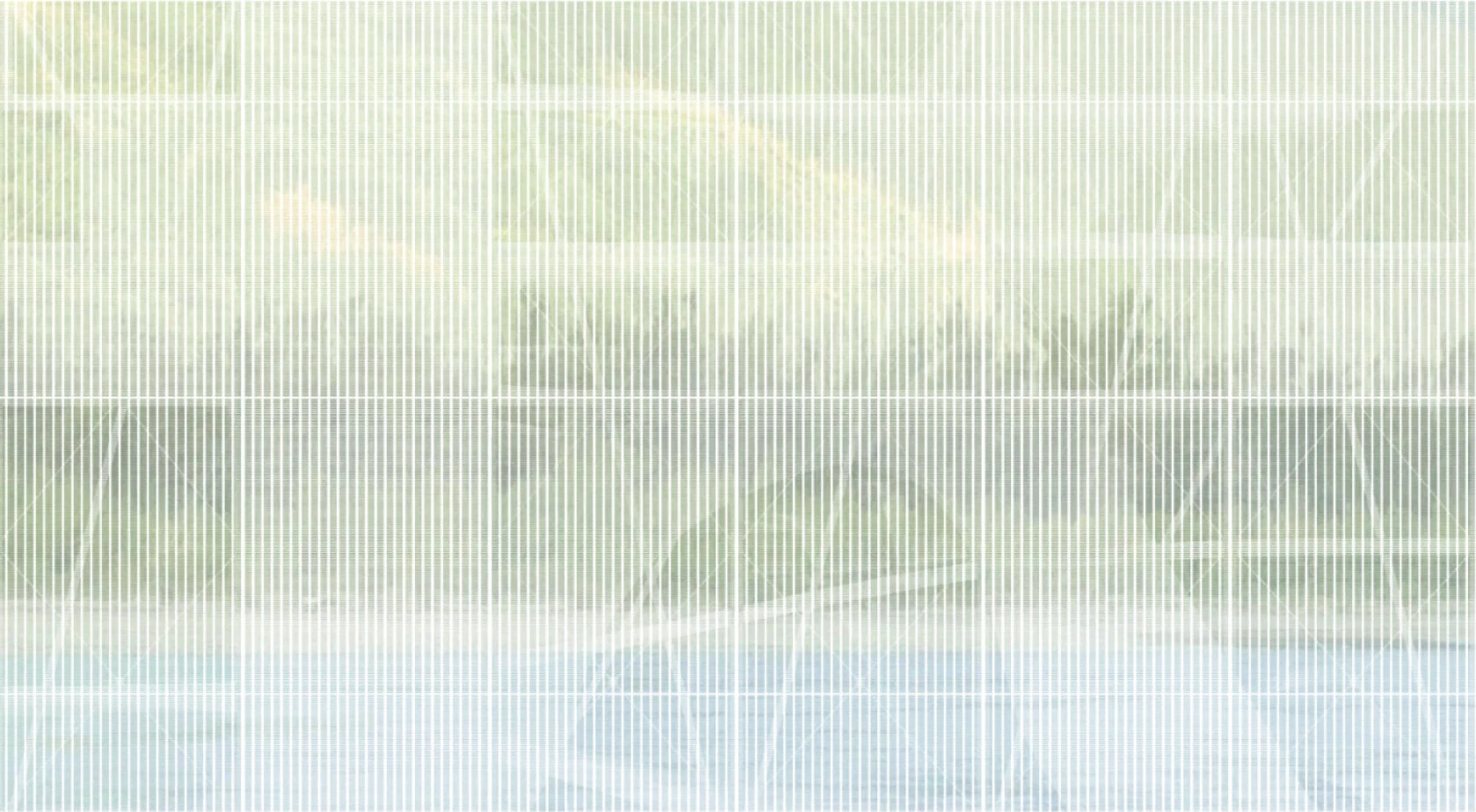
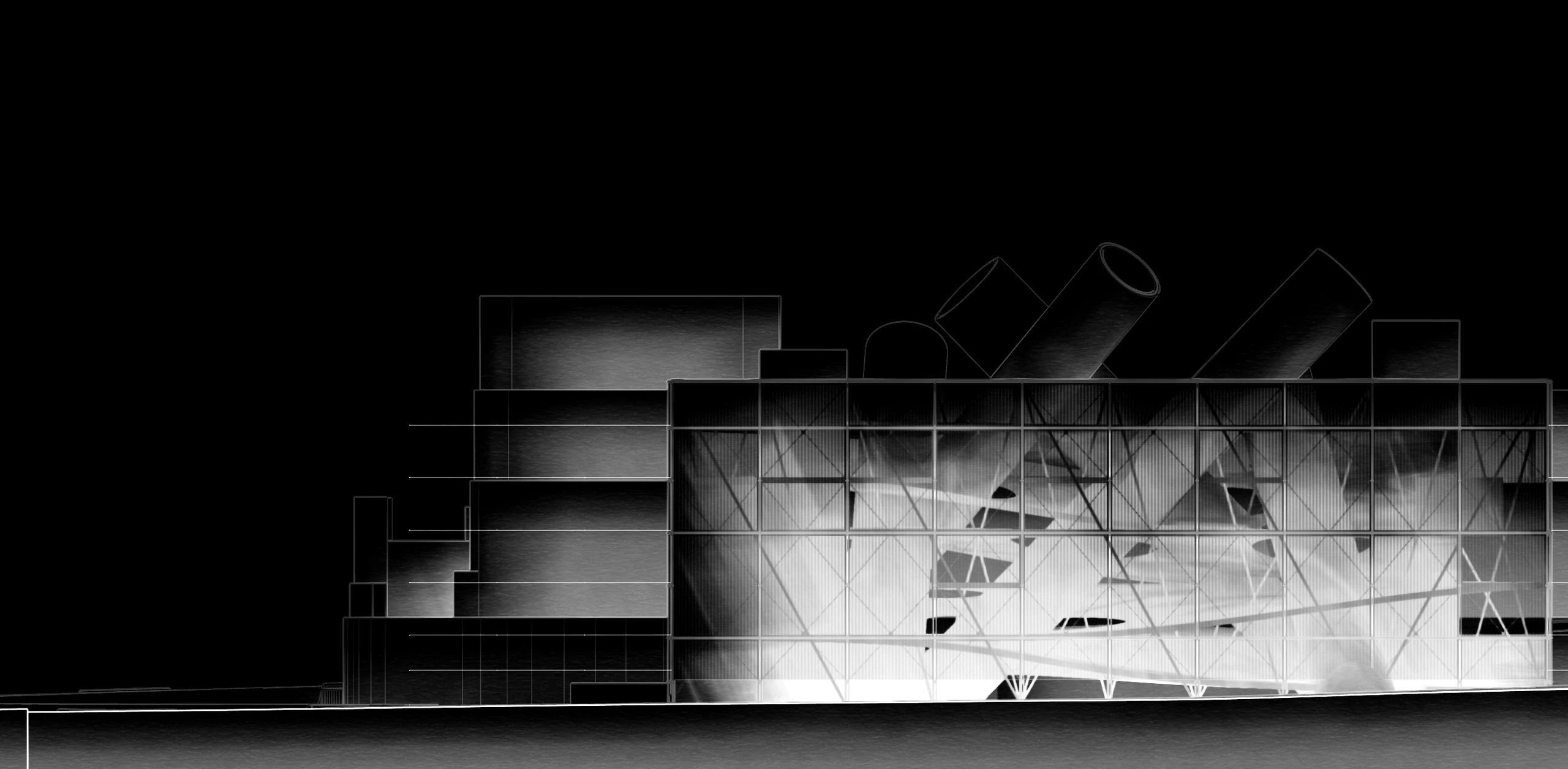
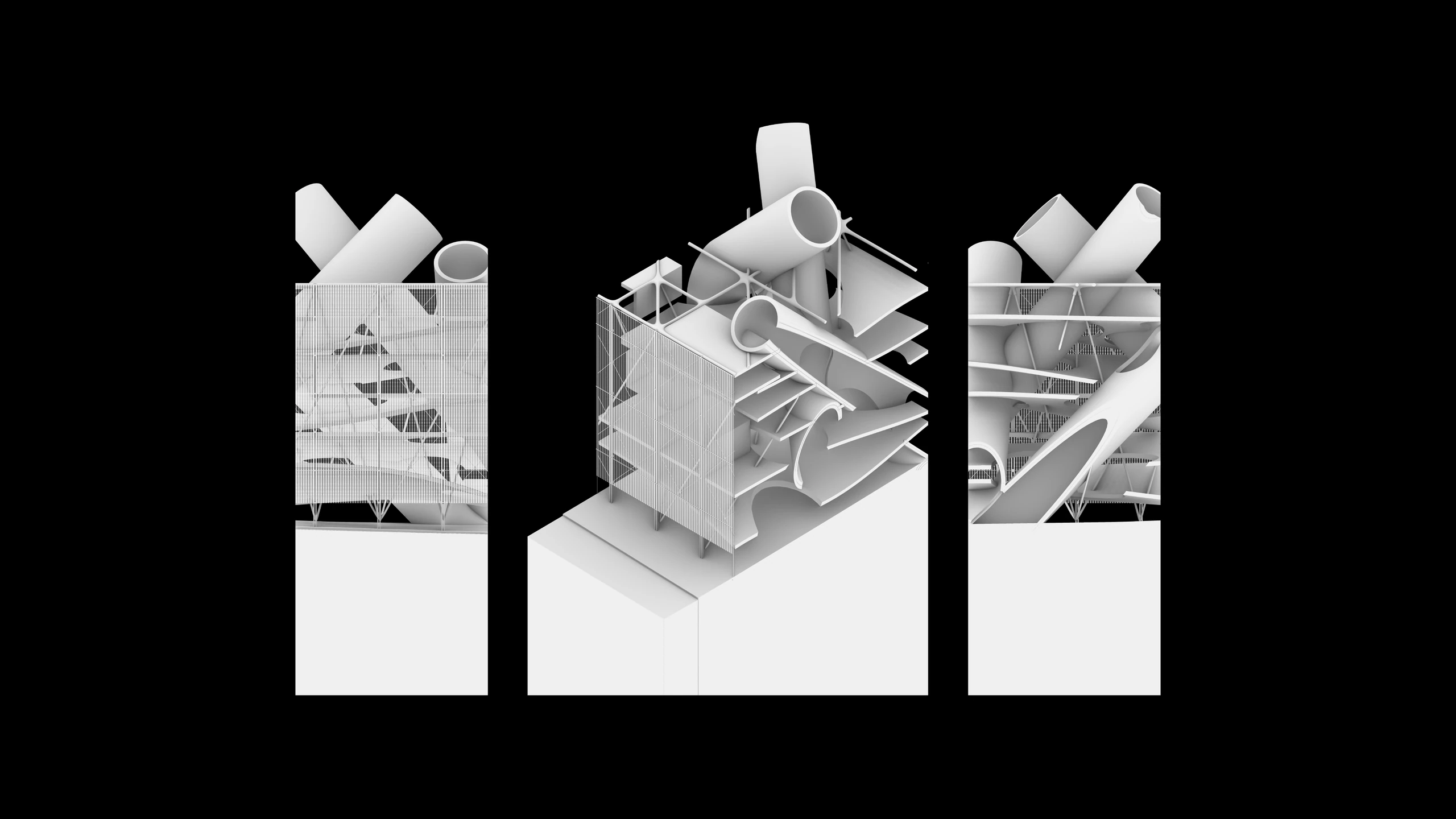
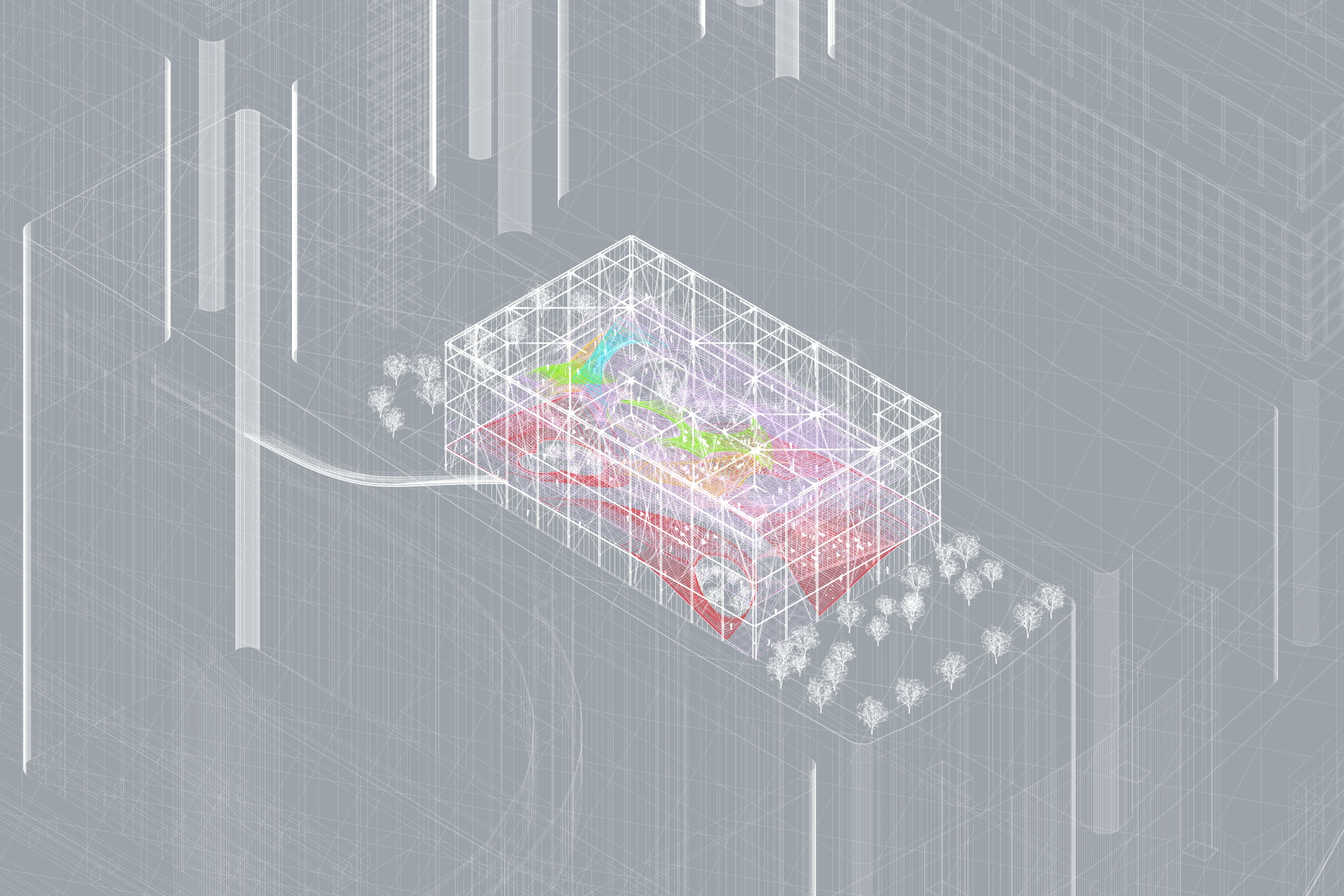
CONSTRUCTING THE INTERFACE
Structure, facade, and media elements are developed together as one system.
These studies test how the building can remain visually open while controlling views, light, sound, and circulation.
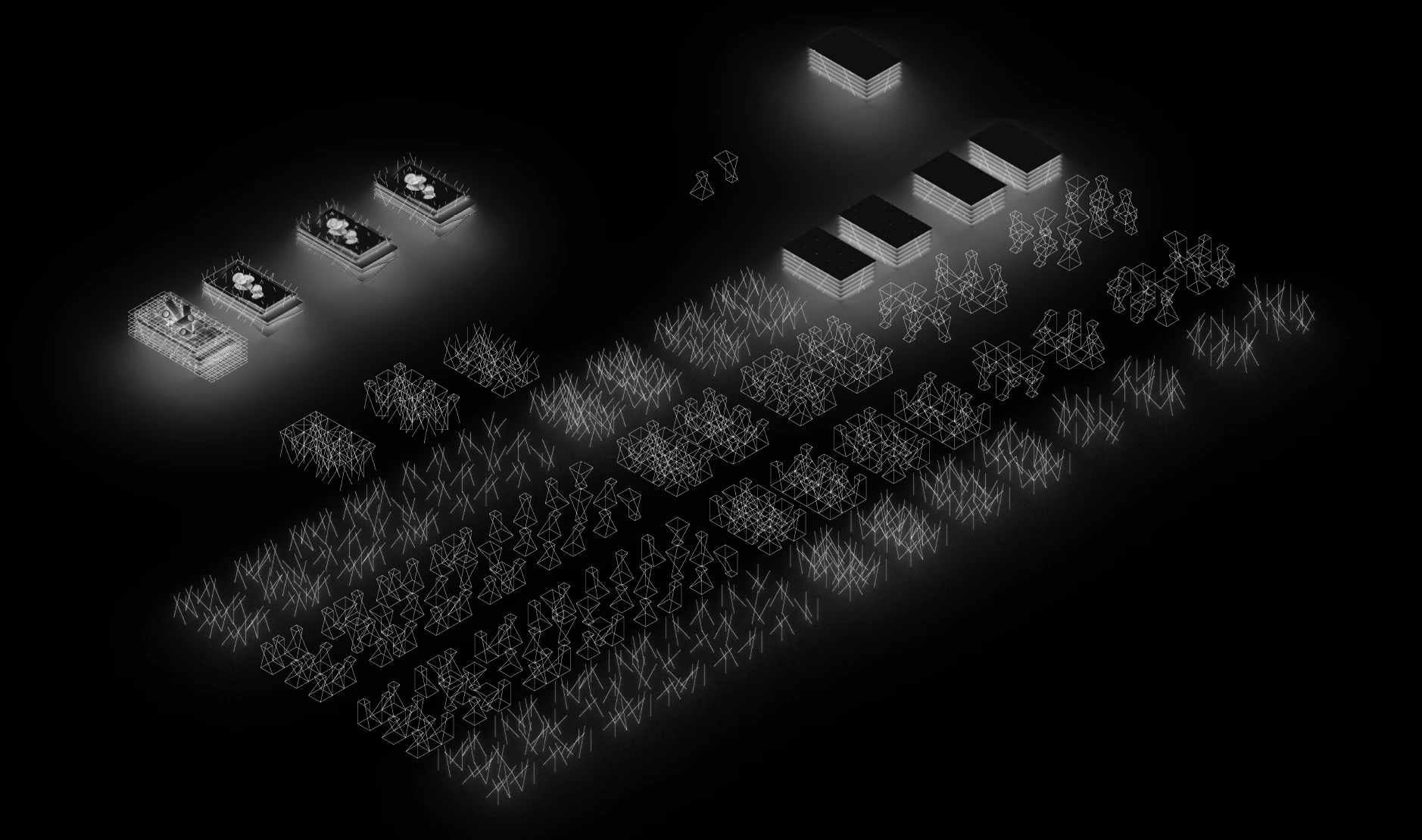
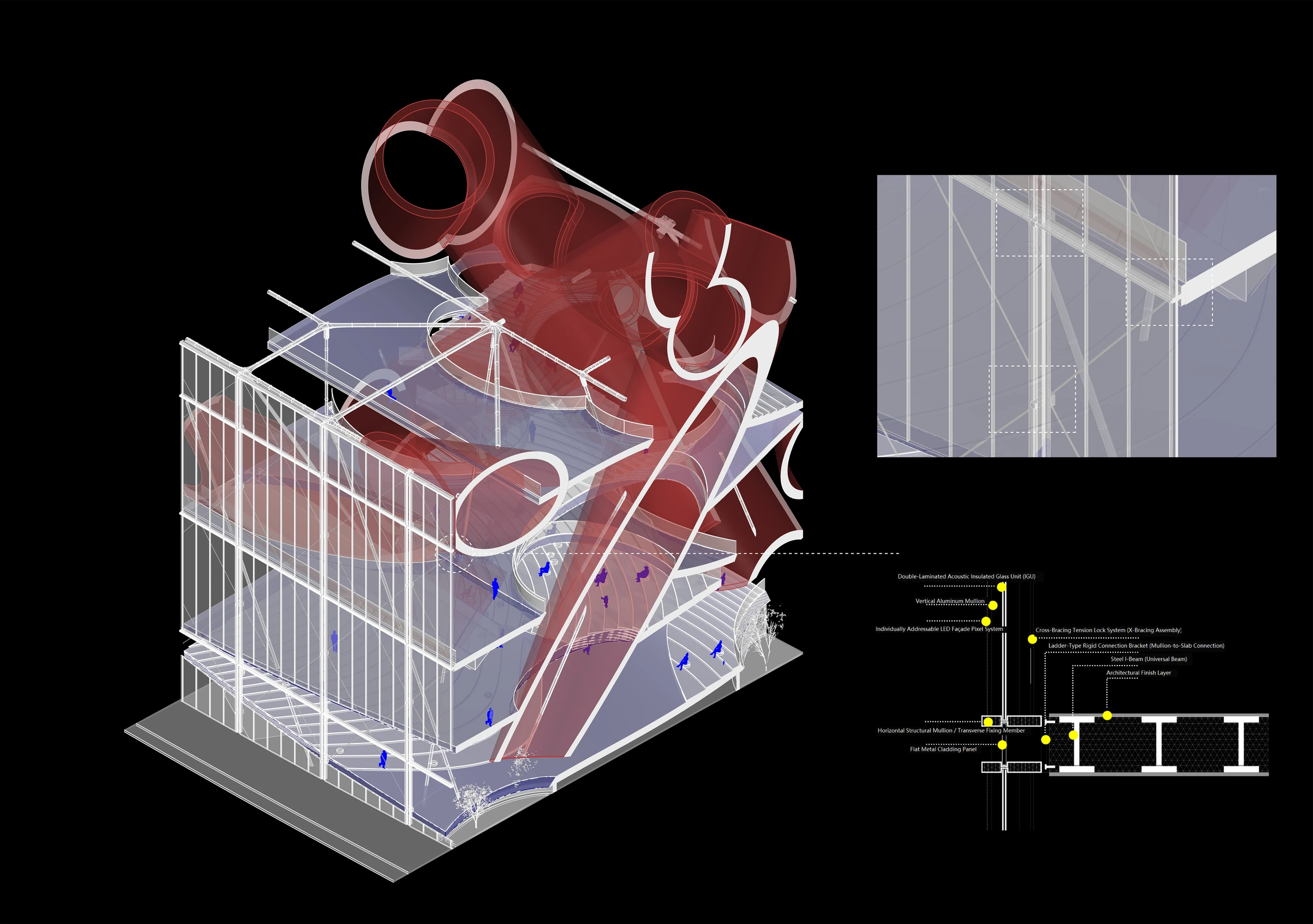
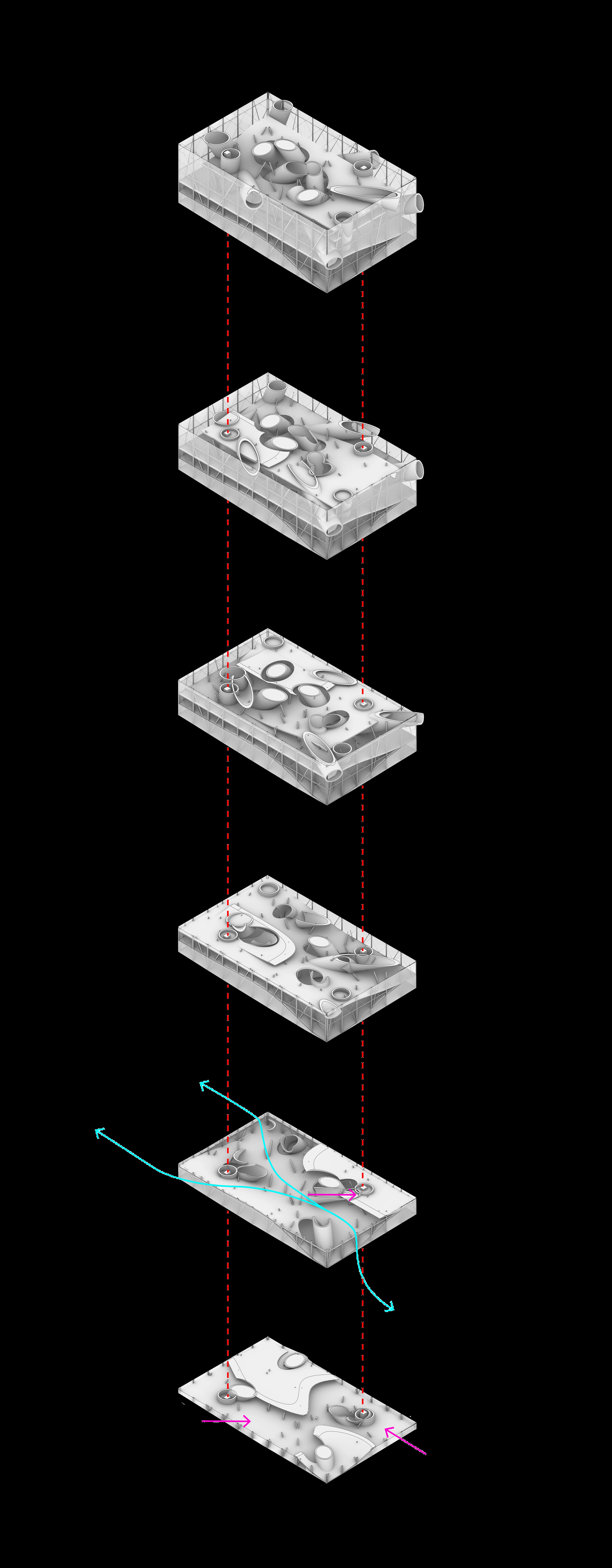
SPATIAL ORGANIZATION
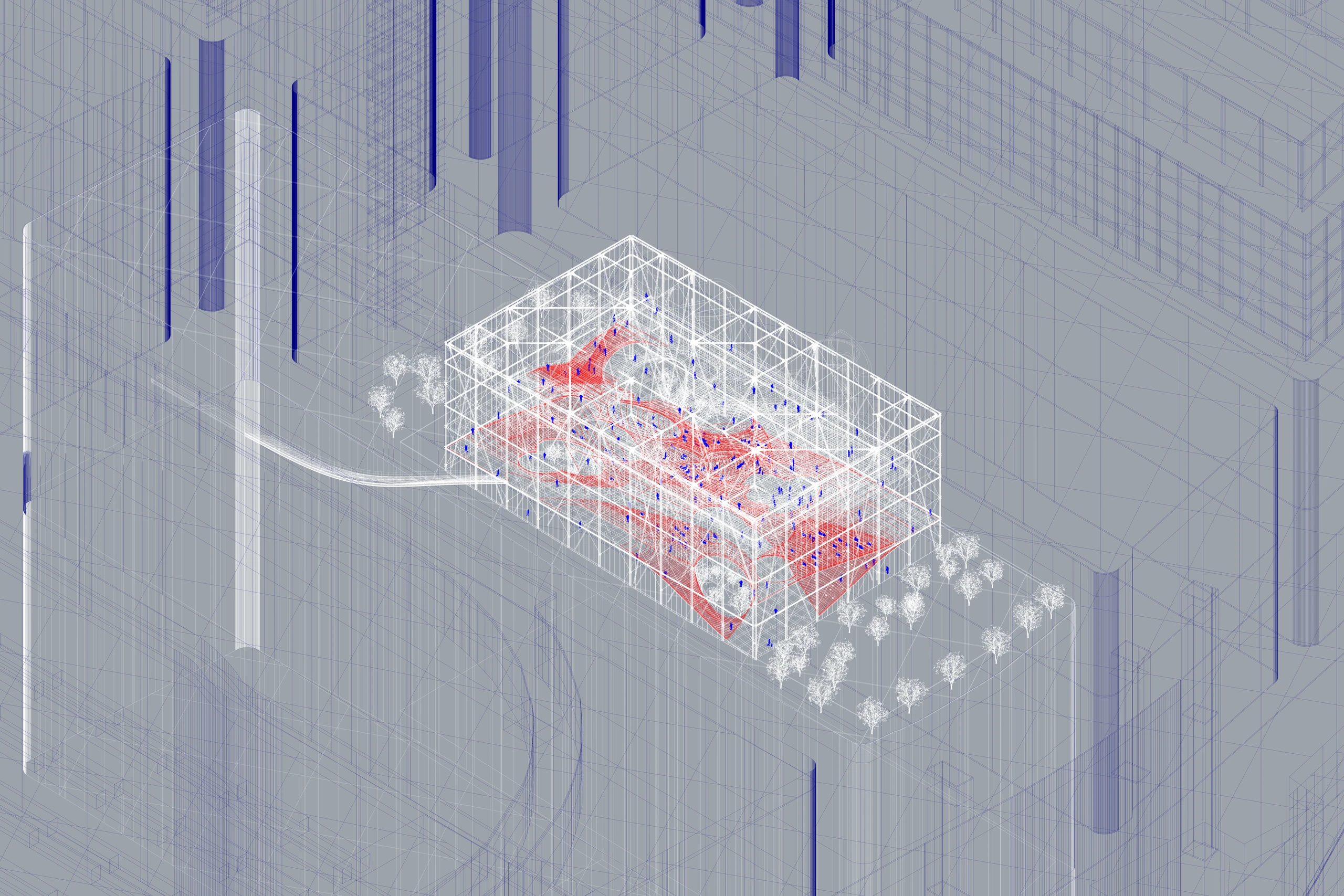
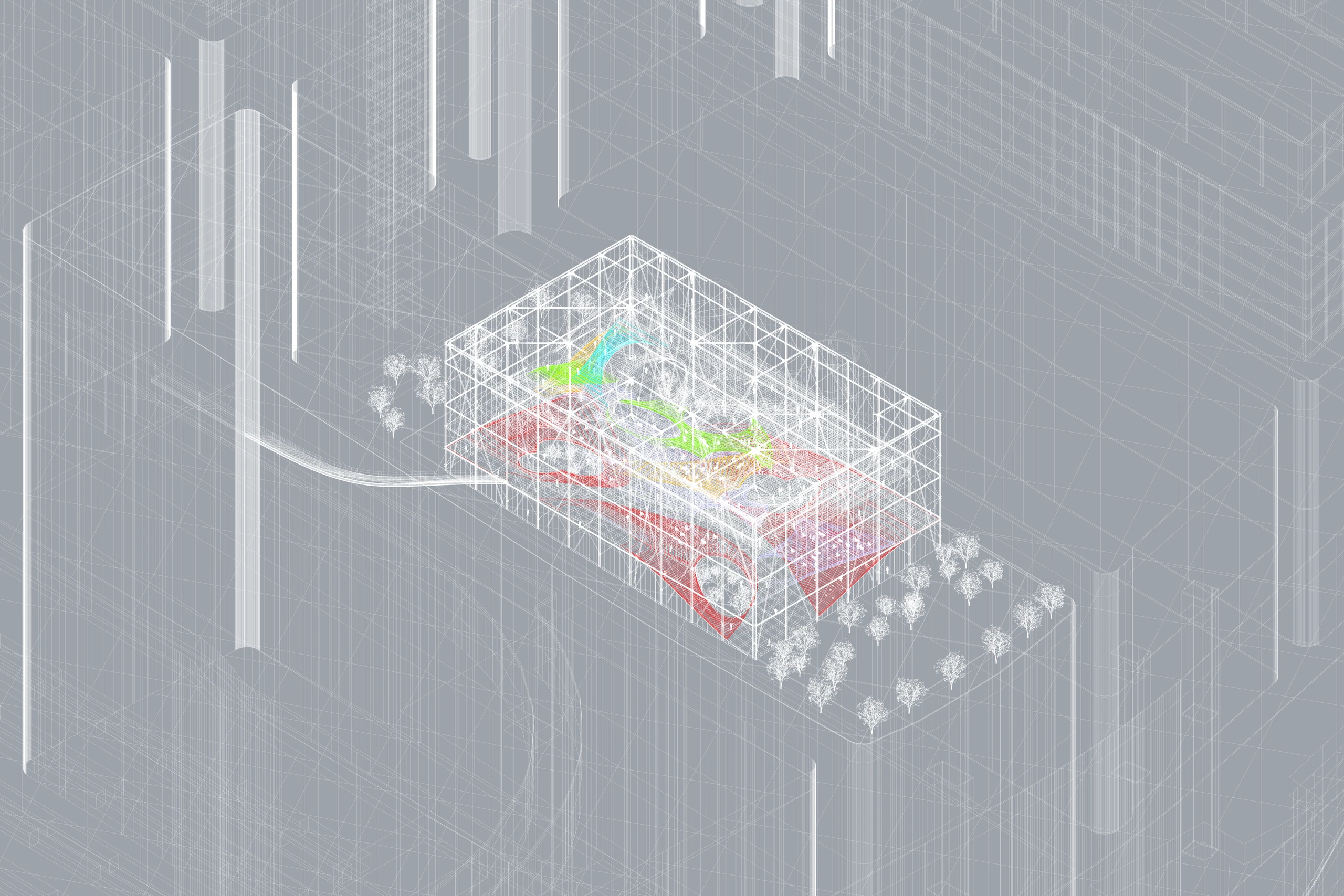
Program and circulation are organized as overlapping spatial conditions rather than a sequence of isolated rooms.
Movement through the building continuously changes what visitors can see, hear, and encounter.
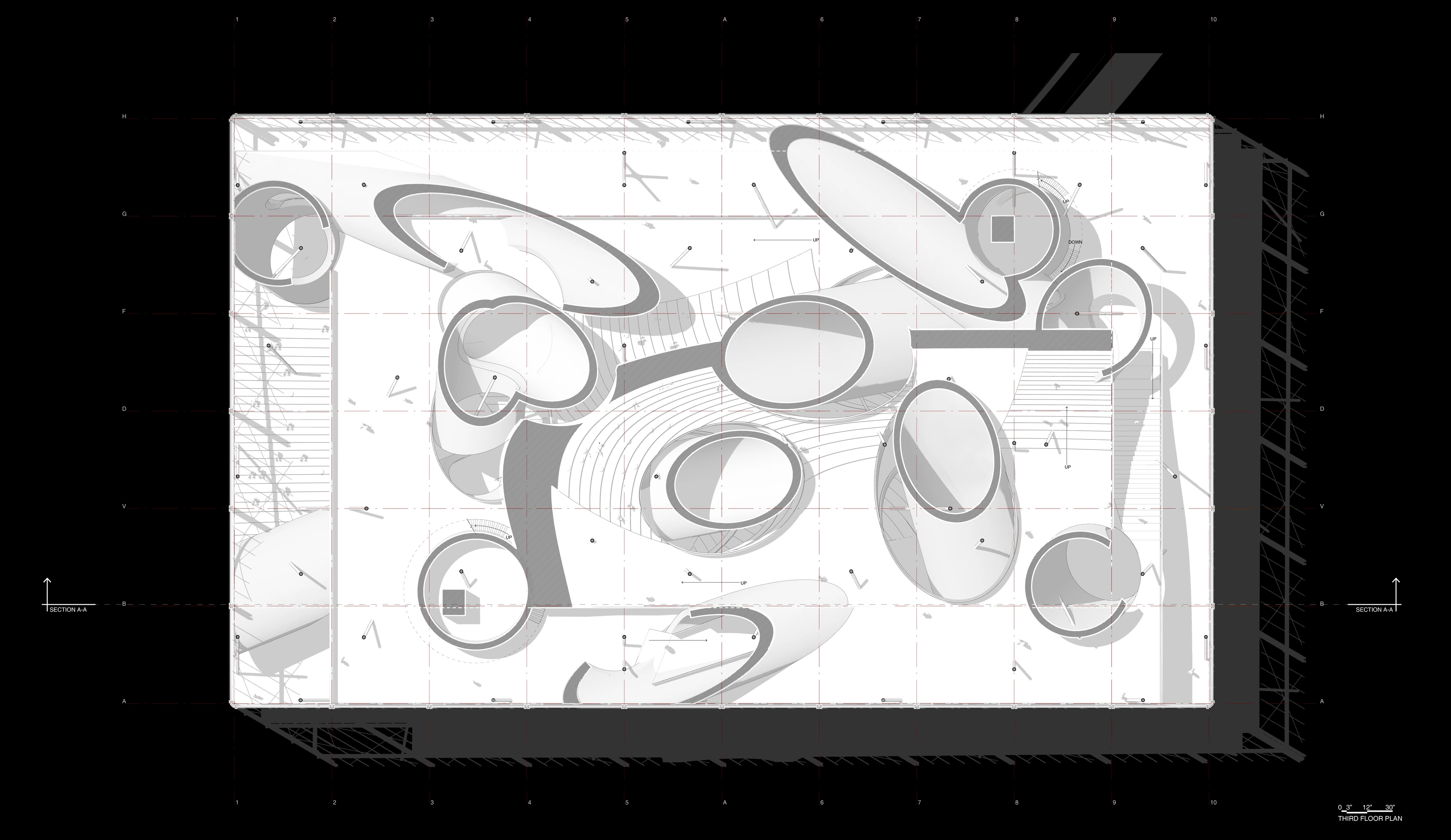
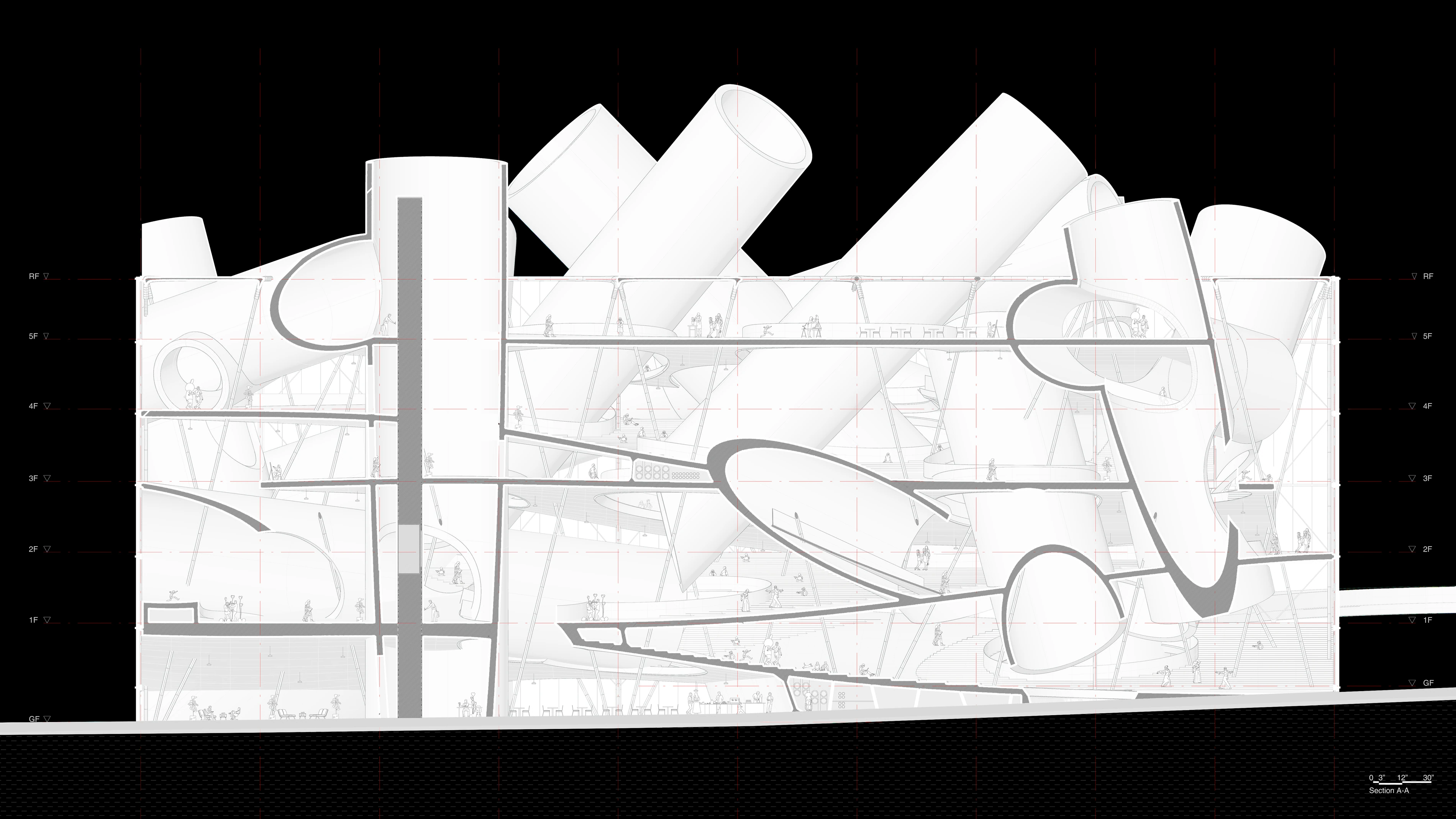
PLANS + SECTIONS
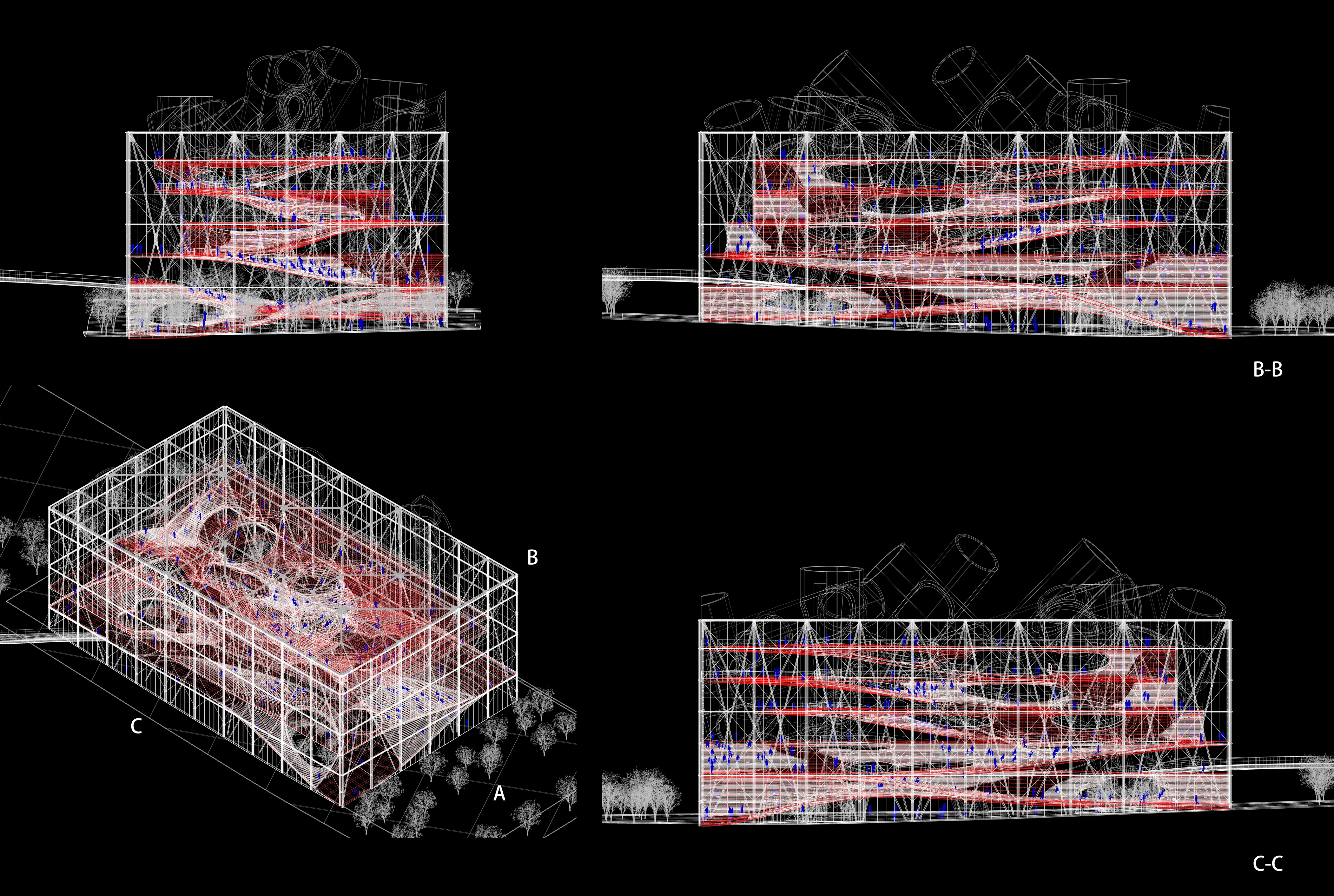
Plans and sections show how circulation cuts through the building and connects different levels, programs, and viewing conditions.
ATMOSPHERIC VIEWS
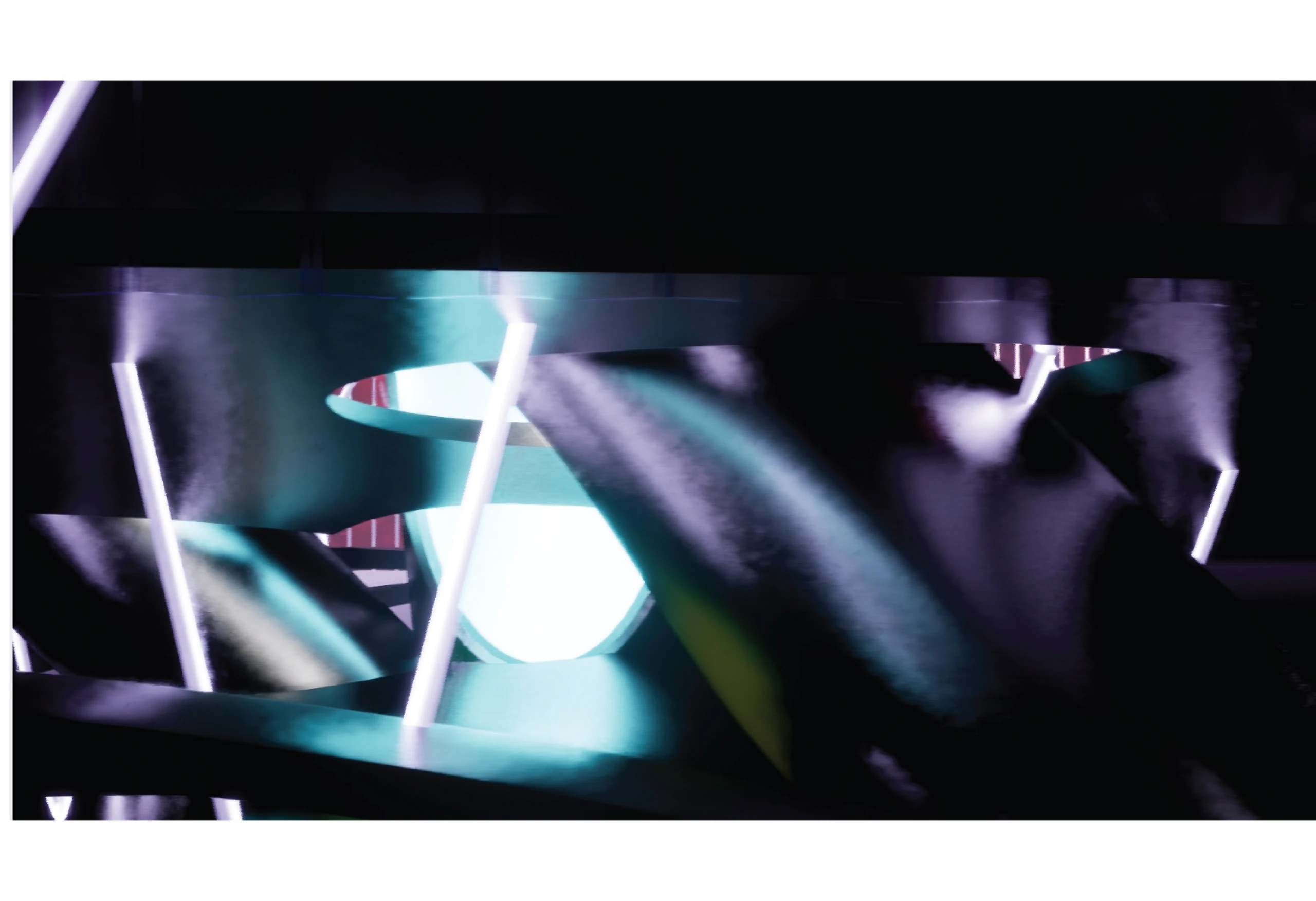
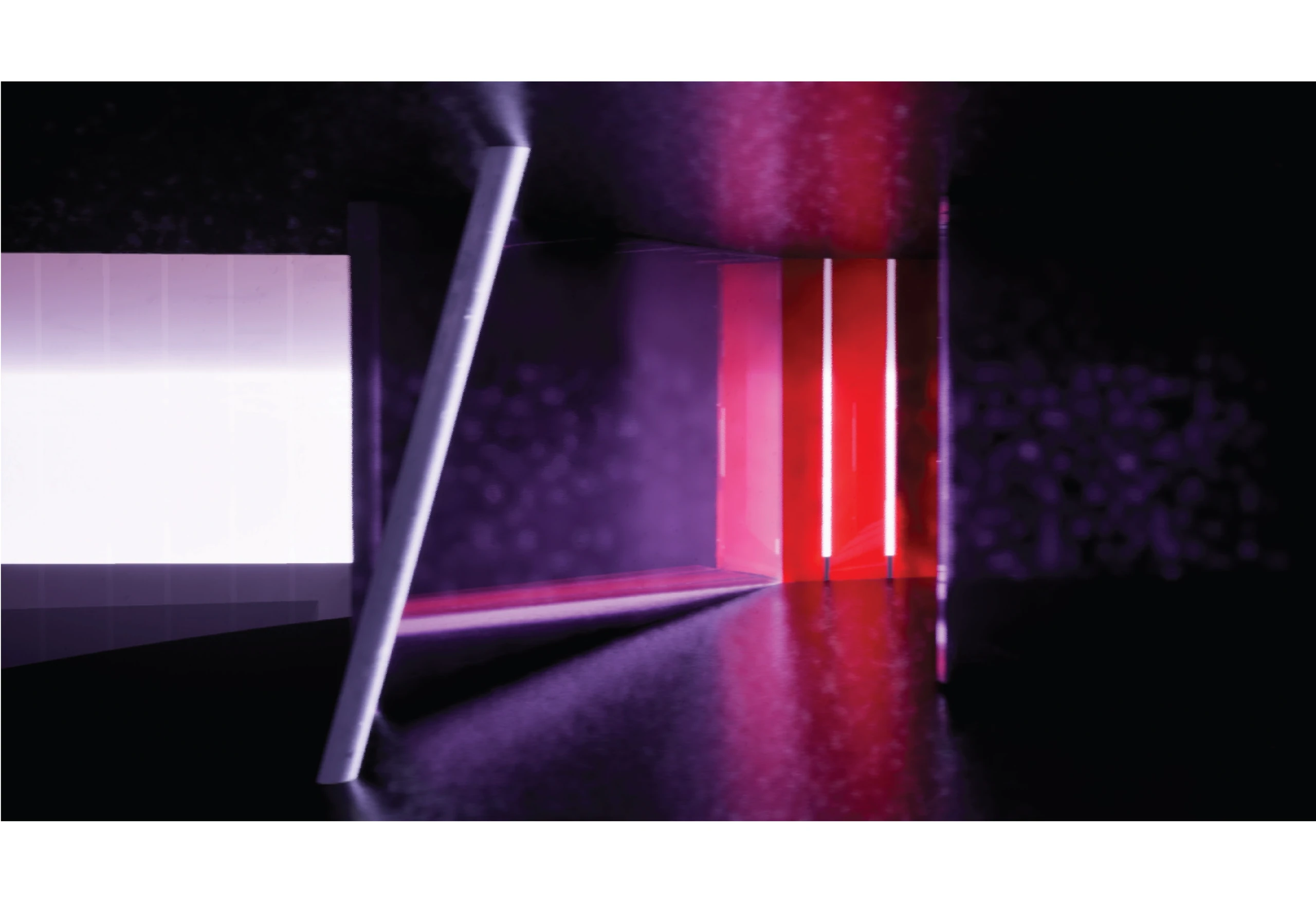
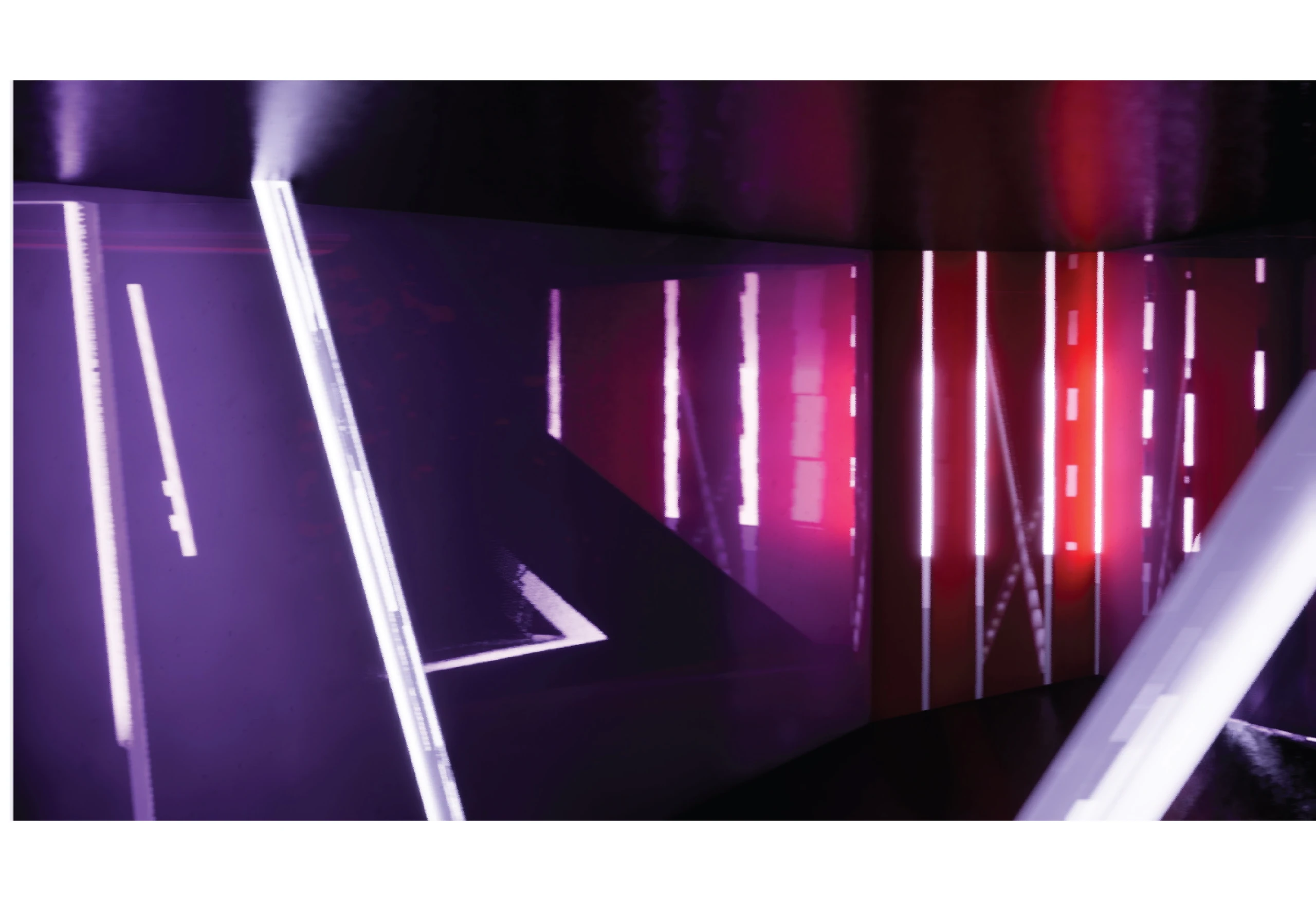
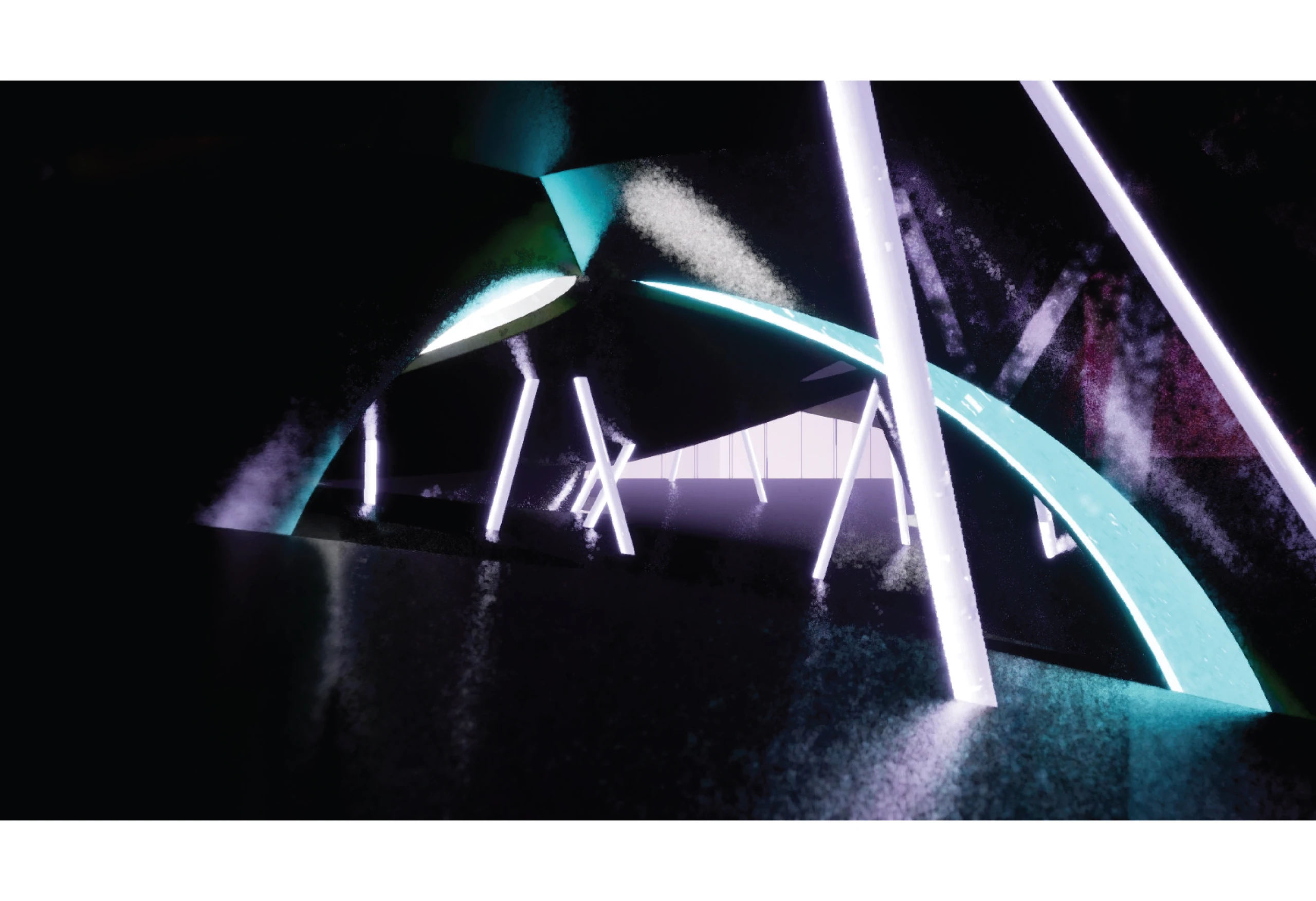
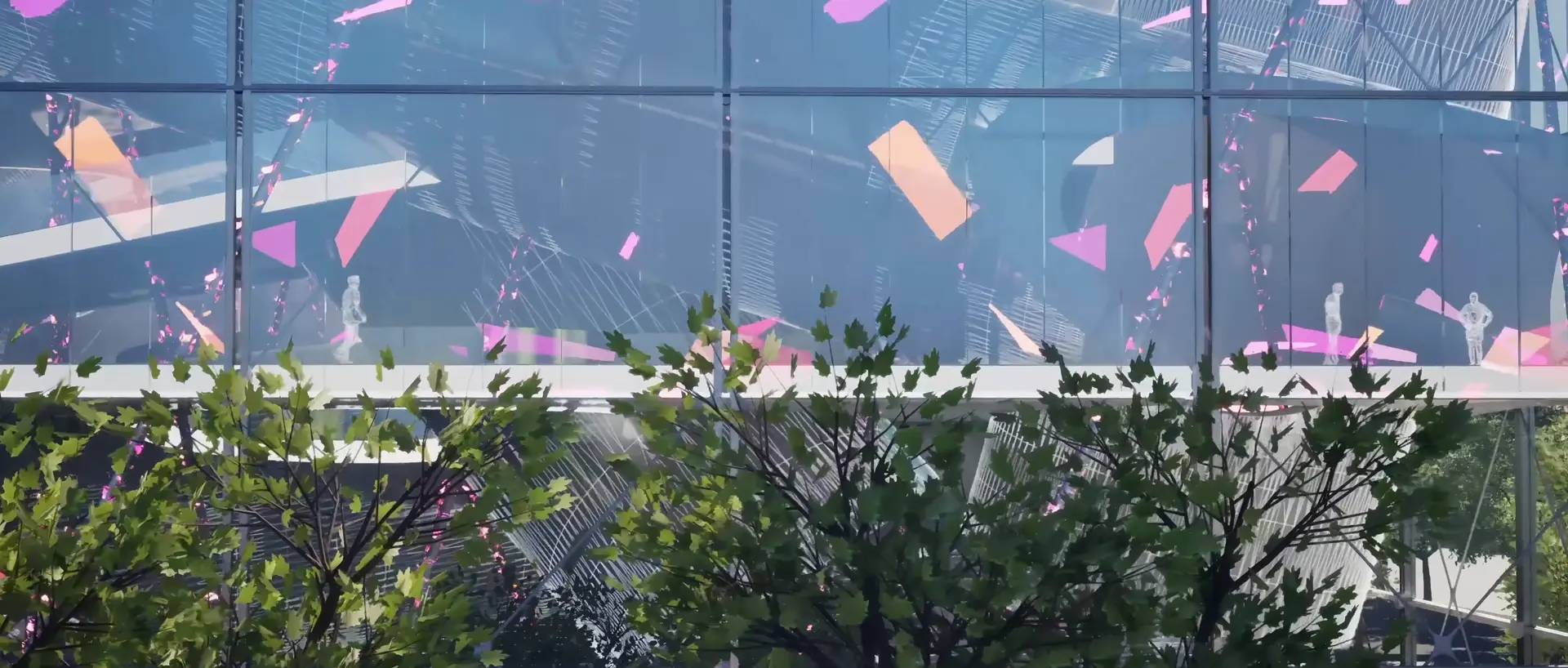
A series of views showing how light, image, structure, landscape, and movement come together inside the museum.
MOVING STUDIES
Short studies of light, structure, image, and movement developed during the project.